
Your process handed off. Running in two weeks.
From your first briefing call to a live, self-running workflow—we own every step in between and report the labor hours your team gets back.


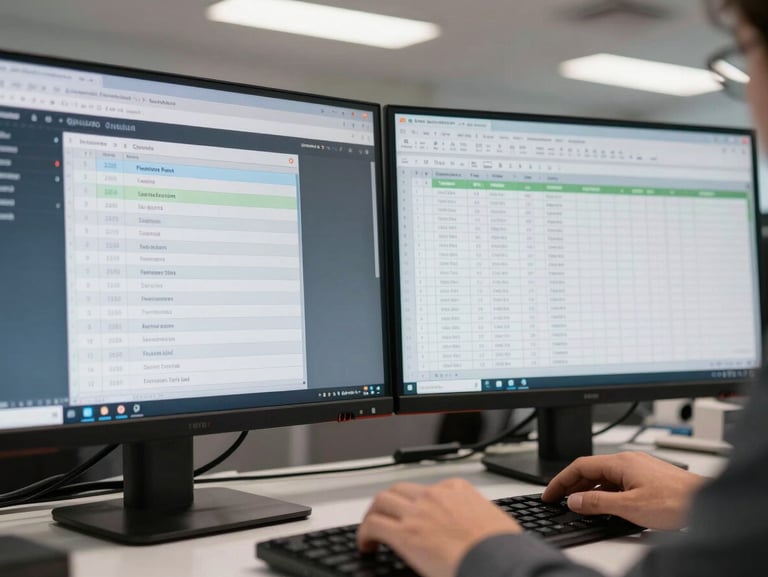

Four steps. Full ownership at every one.
We document your current workflow step by step—inputs, exceptions, handoffs, volume. Nothing gets built until we have a complete picture of what actually runs your process today.
Build: configure and test against real data
We build the automated workflow against a sample of your actual transaction data—not synthetic records. Edge cases get handled before go-live, not after.
Go-live: parallel run, then full cutover
The automated workflow runs alongside your existing process for 48 hours. Once output matches, we cut over. Your team watches the dashboard—we handle the transition.
Refinement: we own the messy middle
Real workflows surface edge cases after go-live. We stay on—adjusting rules, closing gaps, and tuning the workflow until the exception rate is negligible and your team has stopped thinking about it.
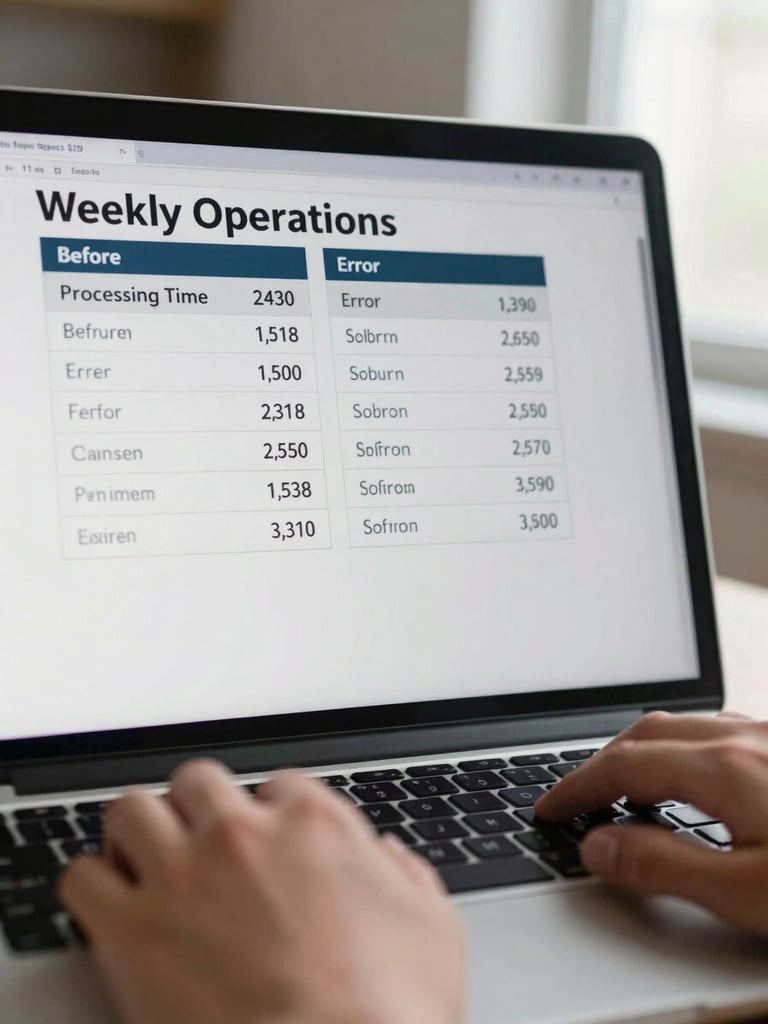
You see the numbers. We stay accountable for them.
Every week after go-live, you receive a plain-language report: labor-hours recovered, error rate before and after, and any open refinement items with an owner and a due date.
No black-box outputs. If the workflow underperforms against the baseline we agreed on, we fix it—not in a future contract, but as part of this one.
Ready to hand off the workflow?
Tell us which process is costing your team the most time. We scope the engagement and return a timeline within one business day.